
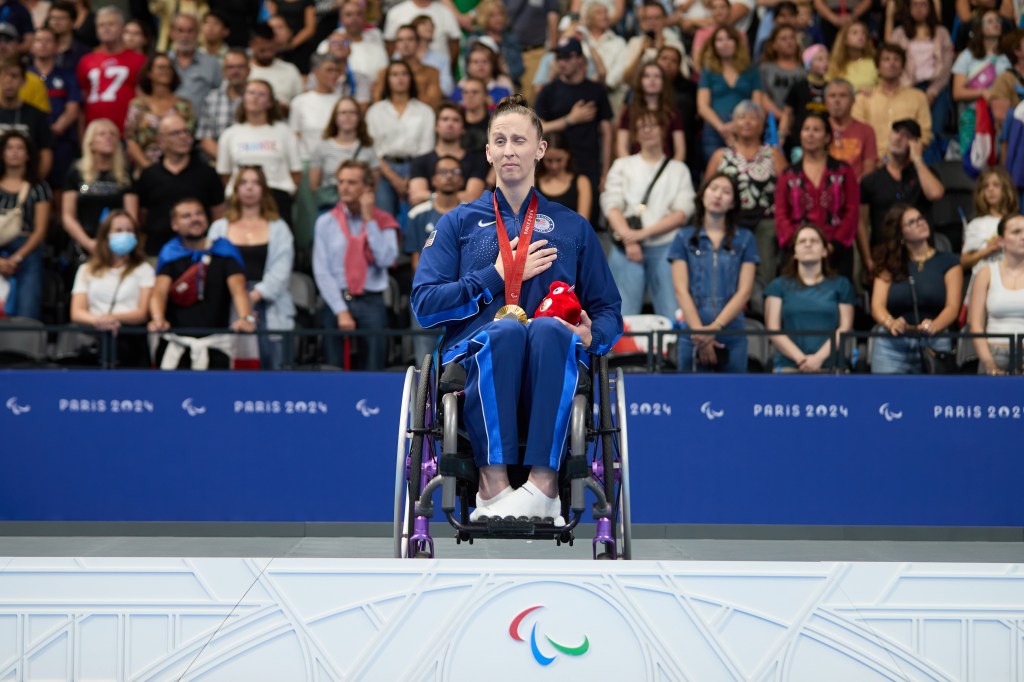
PARIS – Leanne Smith does not care about your opinion.
“I’m just determined to always take the labels that people place on people with disabilities and absolutely crush them,” said the swimmer after winning gold in the women’s 100-meter S3 freestyle. “It may not always look the same as it should be done, but that doesn’t mean it can’t be done.”
For the former gymnast, the gold medal represented the mountain top. The finish to a climb that she had been on since the last Paralympic games, where she performed below her expectations.
“In my brain, I’ve called it my redemption race from Tokyo, where I took silver,” said the now three-time Paralympic medalist.
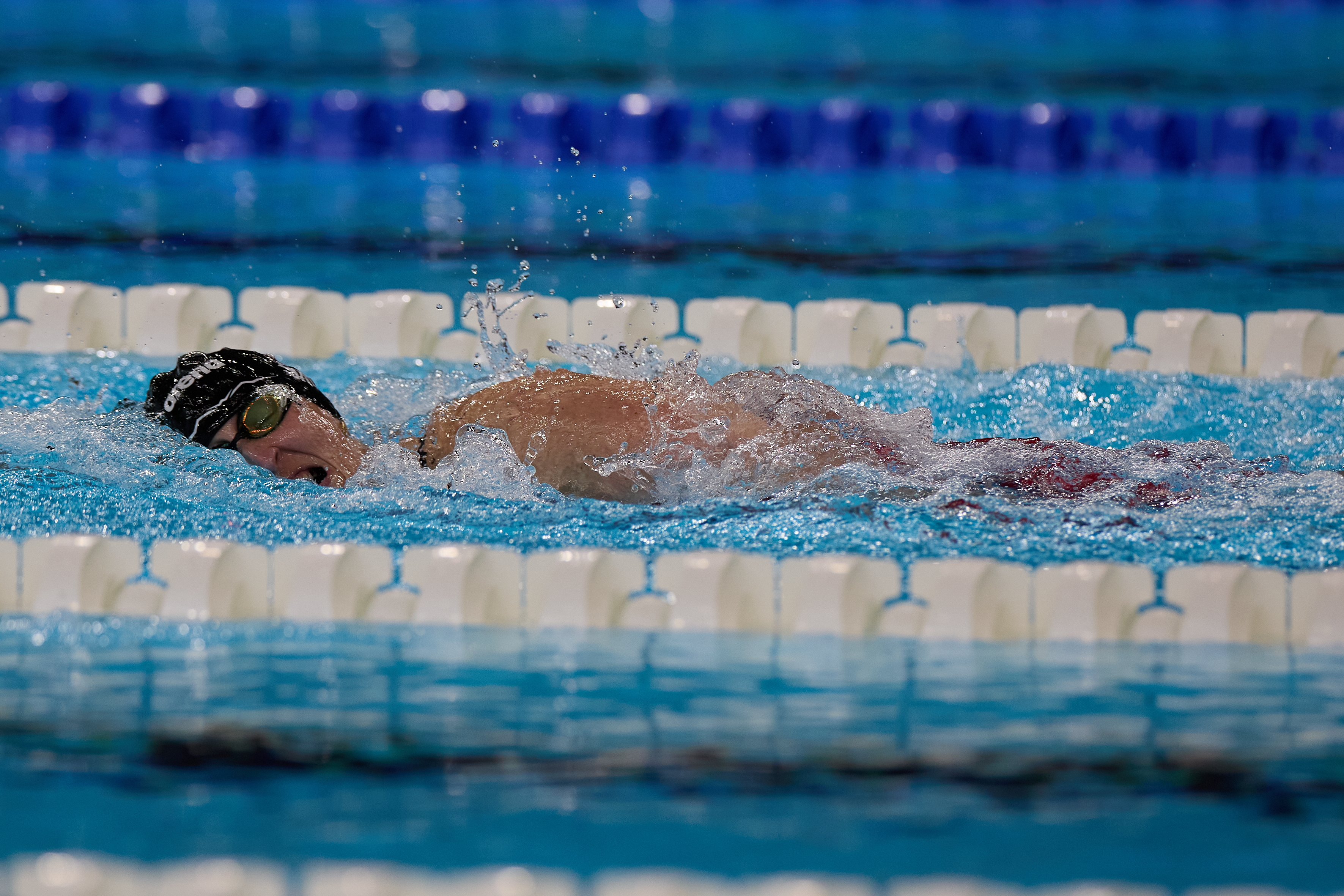
On Smith’s climb to the top, there was plenty of adversity, none bigger than health issues that began two years ago.
Near the peak of her powers, and having won seven gold medals at the 2022 world championships in Funchal, Portugal, Smith was diagnosed with a partially collapsed lung. As she detailed on her Instagram, less than two years ago Smith was dealing with symptoms like atrophy as well as a low heart and blood pressure rate. The swimmer had to relearn how to eat, talk and breathe normally, and other functions are altered to this day.
After six and a half months out of the pool, Smith could return to the place where she was dominating before her health set back, but not without major restrictions.
“Getting back in was with my coach assisting and swimming alongside with me so that I didn’t drown, quite literally,” remarked the Paralympic record holder.
And so it began. An athlete who was so close to the top now had to start from scratch; it would have been enough for most to pack it up and call it a career. That isn’t Leanne Smith.
“It’s something I often say to others: Don’t let your circumstances define you.”
She, with the help of coach Dave Modzelewski, completely reinvented herself in the pool.
“That was the biggest challenge—learning how to swim and how to move within the new restrictions,” uttered Smith. “It was definitely frustrating; there were other setbacks in between that, but ultimately we had one goal in mind: make it back here to this stage.”
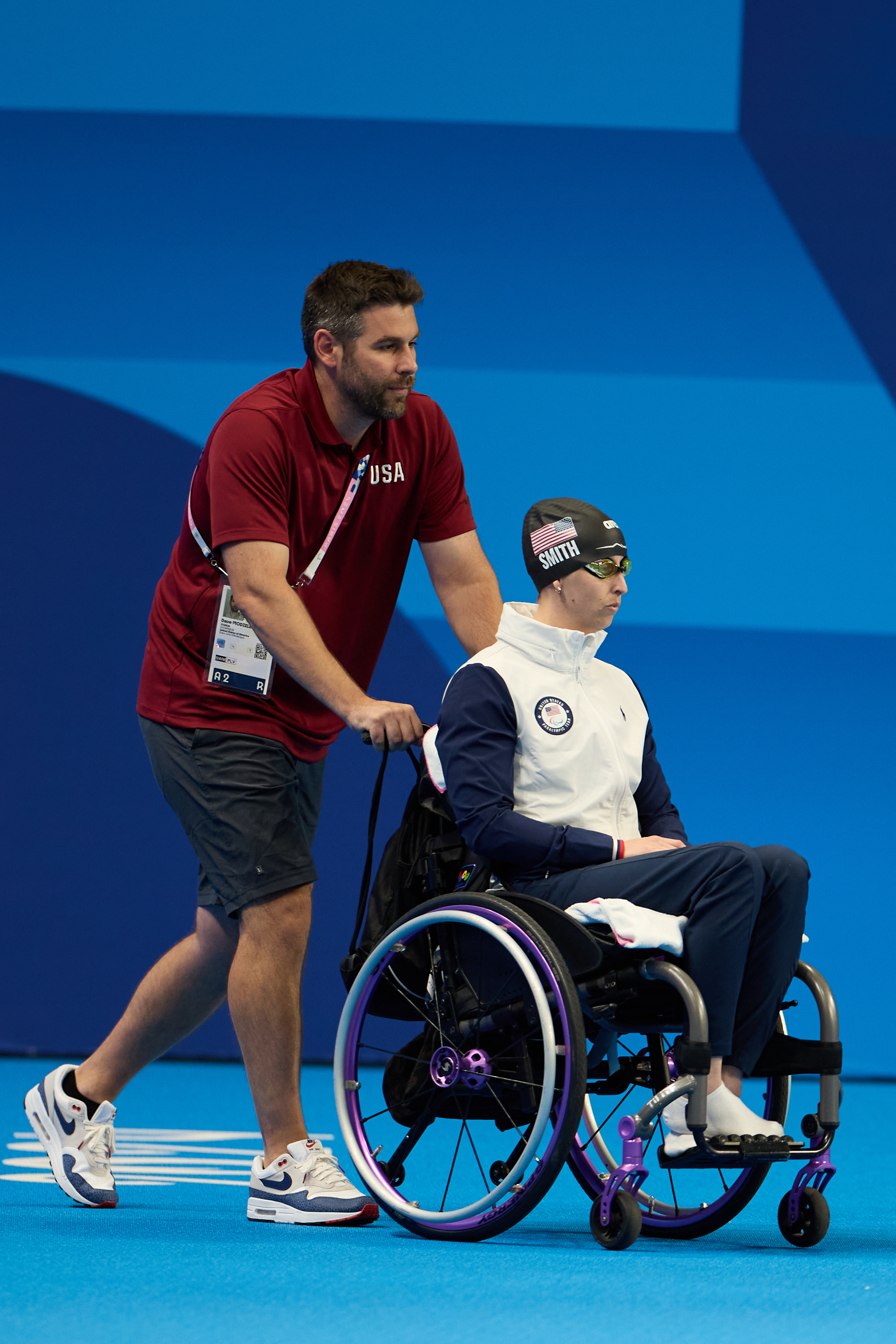
Modzelewski echoed this sentiment, explaining how he and Smith had to take everything into account to come up with a new method in the pool.
“It was reimagining specific things like body position and what she could do with her arms, what mobility she had, what flexibility she had,” said the Massachusetts-based coach. “Basically, it was working with what we had and trying to make it the most efficient, most effective and fastest it could be.”
This was obviously no small task, and early on the hill seemed daunting, but Smith’s determination eventually turned doubts into afterthoughts.
“When we first got back in the pool, a lot of people may have written us off and thought there’s no way that stroke can be as fast as you once were,” said Modzelewski. “I’d like to say that we proved that wrong.”
To say that would be an understatement, not only did Smith reach her goal of winning the gold medal, but she set a Paralympic record with a time of 01:28.81. After slaying the dragon and coming back from what many would call insurmountable odds, the swimmer was in a state of disbelief.
“To make it back and be a gold medalist, it’s crazy that I’m even saying that to you right now,” remarked Smith. The shakiness of her voice showcasing the emotion of the moment. “It’s a dream come true, is what it is. A lot of hard work, sweat, tears and all of the emotions have gone into it.”

 Wheelchair Sports Federation
Leave a comment