
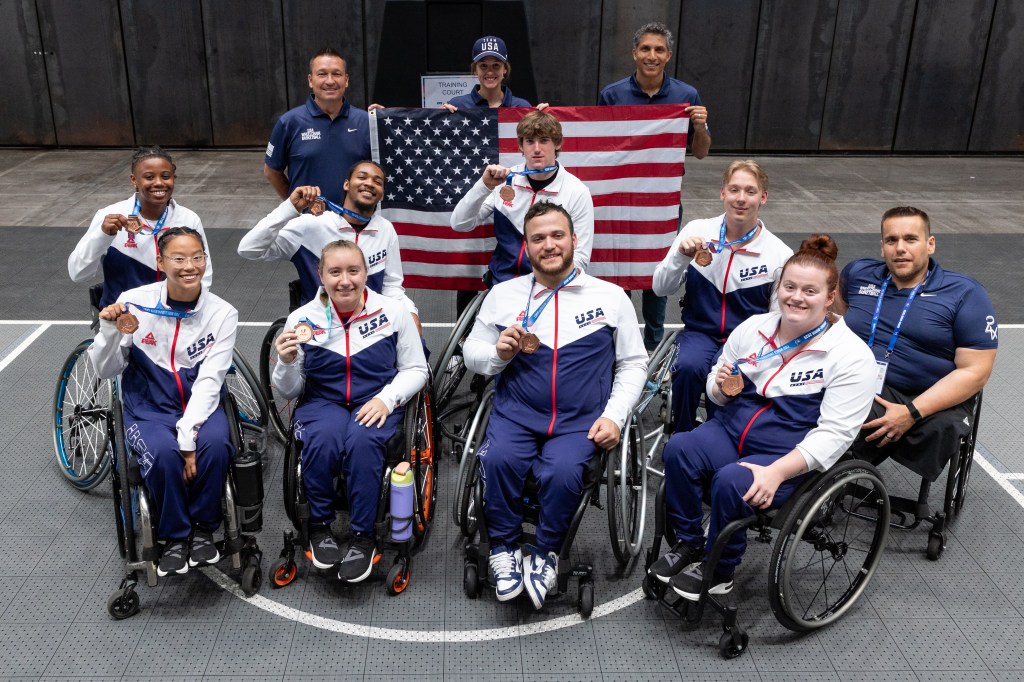
BOCHUM, GERMANY — On a landmark week for adaptive sport, Team USA’s men’s and women’s squads both captured bronze medals in 3×3 wheelchair basketball at the 2025 FISU World University Games, the first time an adaptive sport has ever been included in the event’s storied history.
Hosted inside the iconic Jahrhunderthalle in Bochum, the fast-paced 3×3 format brought high drama and constant action to a packed house of supporters. For Team USA, it was a debut to remember—marked by determination, adaptability, and a pair of podium finishes.
WOMEN MAKE HISTORY WITH PODIUM FINISH
The women’s team — Elizabeth Becker, Hannah Exline, Anesia Glascoe, and Marlee Wagstaff — opened the tournament strong before encountering fierce competition and a semifinal heartbreak. But in the bronze medal match against Brazil, the Americans responded with a disciplined, confident performance that ended in an 11–3 win.
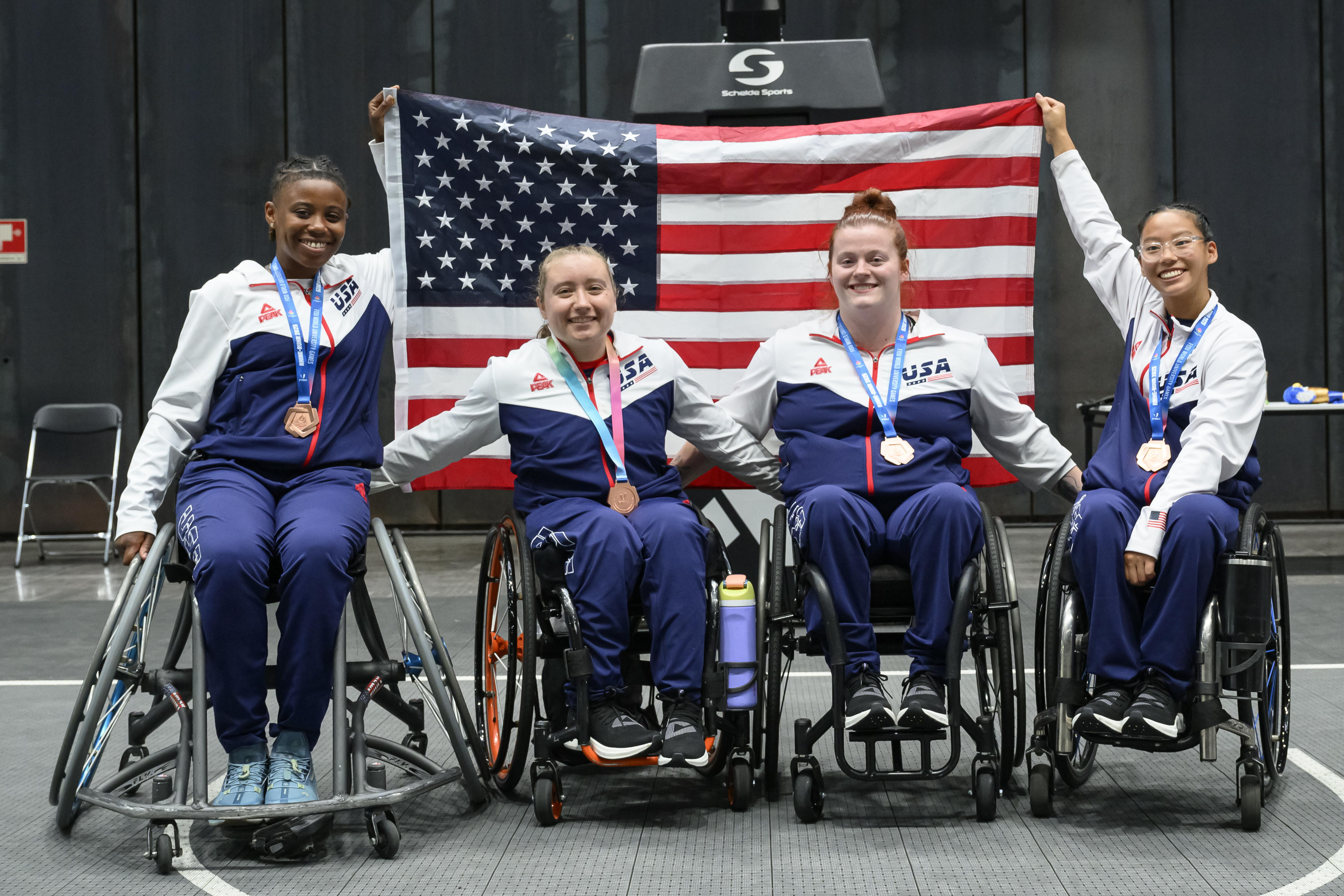
“I’m proud,” said Exline. “I’m proud that our team podiumed, it being our first time and being a historical event, being the first time that adaptive wheelchair basketball has been included in the World University Games. I’m very proud. Yeah, I’m happy I played with my team and we battled it out.”
The team adapted to the non-stop nature of the 3×3 format and relied on shared trust and cohesion to push through. Glascoe credited their evolving chemistry as a key part of their growth. “Our team is built off of like multiple different personalities,” Glascoe offered. “And I feel like that was the best thing about our team… just learning each other within this week that we were here and being patient with each other on the floor and as well as off the floor—it made us perform a lot better.”
Head coach Abby Dunkin, a Paralympic gold medalist herself, called it an “incredible honor” to lead the first U.S. women’s 3×3 team at the World University Games. “It’s about more than just competition; it’s about representation, progress, and paving the way,” Dunkin said. “They embraced the unknown, adapted quickly, and left everything on the court. To fully submerge into a new sport on a global stage is pretty remarkable.” She praised their resolve throughout the week: “They handled adversity with grit and grace. Whether it was fatigue, tough losses, or unfamiliar international competition, they stayed composed and leaned into one another.”
Exline and Wagstaff led with consistent two-way play, Becker organized spacing, and Glascoe returned from a hard fall in the semis to contribute in key moments. Despite the limited prep time, the group’s bond solidified quickly—and their place in history secured.
MEN FINISH STRONG WITH BRONZE OVER JAPAN
The men’s squad — Ryan Fitzpatrick, Jack Pierre, Joe Rafter, and Martrell Stevens — bounced back from a tough semifinal loss to outpace Japan, 10–6, in the bronze medal final. From the opening possession, the Americans dictated tempo with tight defense and unselfish ball movement.
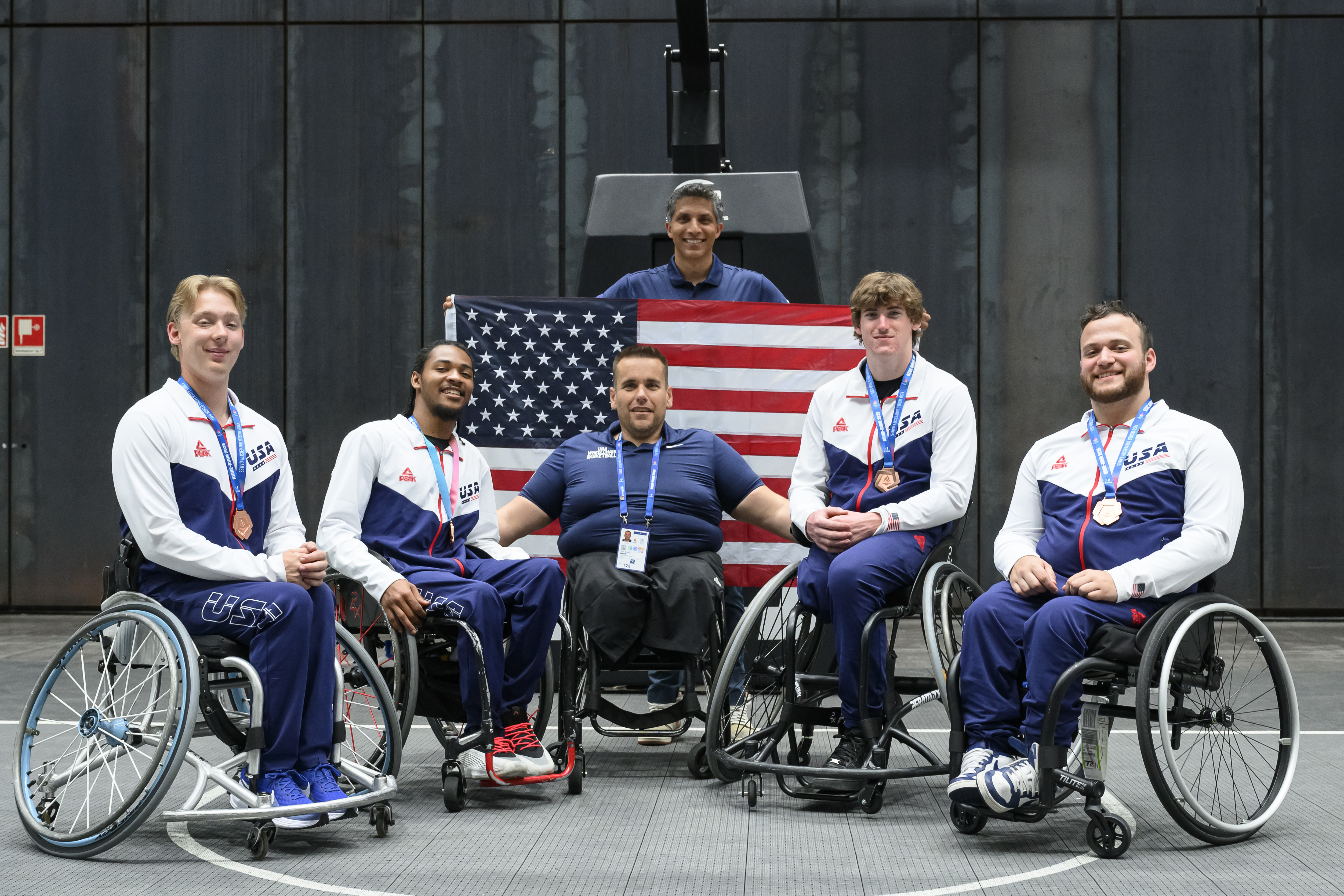
“The mindset was just, you know, trust in our coaches, trust in our game plan, trust in what we do at practice,” said Stevens. “We had a really tough game offensively, but defensively we played great, so I think we brought the same intensity defensively towards the Japan game, and it showed in the scoreboard.”
Rafter and Pierre worked well off the ball to stretch defenders, while Fitzpatrick patrolled the paint and Stevens controlled the shot clock. The team capitalized on spacing, moved the ball with precision, and maintained defensive urgency throughout.
Rafter, a sports journalism student, said the atmosphere made the experience unforgettable. “Packed seats. Sold out — pretty much all weekend,” he said. “I don’t think any of us on the USA team have ever played in front of a crowd like that.”
The Americans entered the tournament with limited time together and still managed to medal against more experienced teams. Their cohesion improved with every outing, and their discipline in the bronze medal match reflected how far they had come in a short window.
Men’s head coach Ryan Martin praised the team’s progress. “This was a great experience for the entire team, and FISU put on a first-class event,” he said. “I’m proud of the team who learned a new version of wheelchair basketball on the fly and competed at a high level against some more experienced teams. Their growth from the first tryout camp in North Carolina to the podium in Germany is a testament to their ability to gel quickly.”
A GLOBAL DEBUT, A NEW STANDARD
This year’s Games marked the international debut of wheelchair 3×3 basketball at a major multi-sport event. With a single basket, 12-second shot clock, and nonstop action, the format delivered a showcase of speed, physicality, and high-stakes decision-making.
For Glascoe, playing in such a compact, high-tempo structure helped her grow as a competitor. “You kind of have to make sure that you use it all—you utilize it to the best of your ability,” she said. “You don’t really want to take any time off the clock where you’re doubting yourself or getting upset… so I definitely think I’ve been able to stay composed within those 10 minutes.”
She also reflected on the moment’s larger significance. “It means honestly more than I can put into words,” Glascoe said. “Just being able to be a part of history, make history, and go back home with something to show that we were a part of history—it’s a really good feeling.”
Martin also sees long-term potential for Team USA in this format. “3×3 is a growing sport in the U.S.,” he noted, “and I imagine the U.S. will be competitive on the international stage soon.”
WHAT COMES NEXT
Wheelchair basketball’s 3×3 debut at the World University Games is now complete, but its legacy is just beginning. Team USA’s double bronze sends a clear signal that American programs are ready to grow into this format and contend on the international stage.
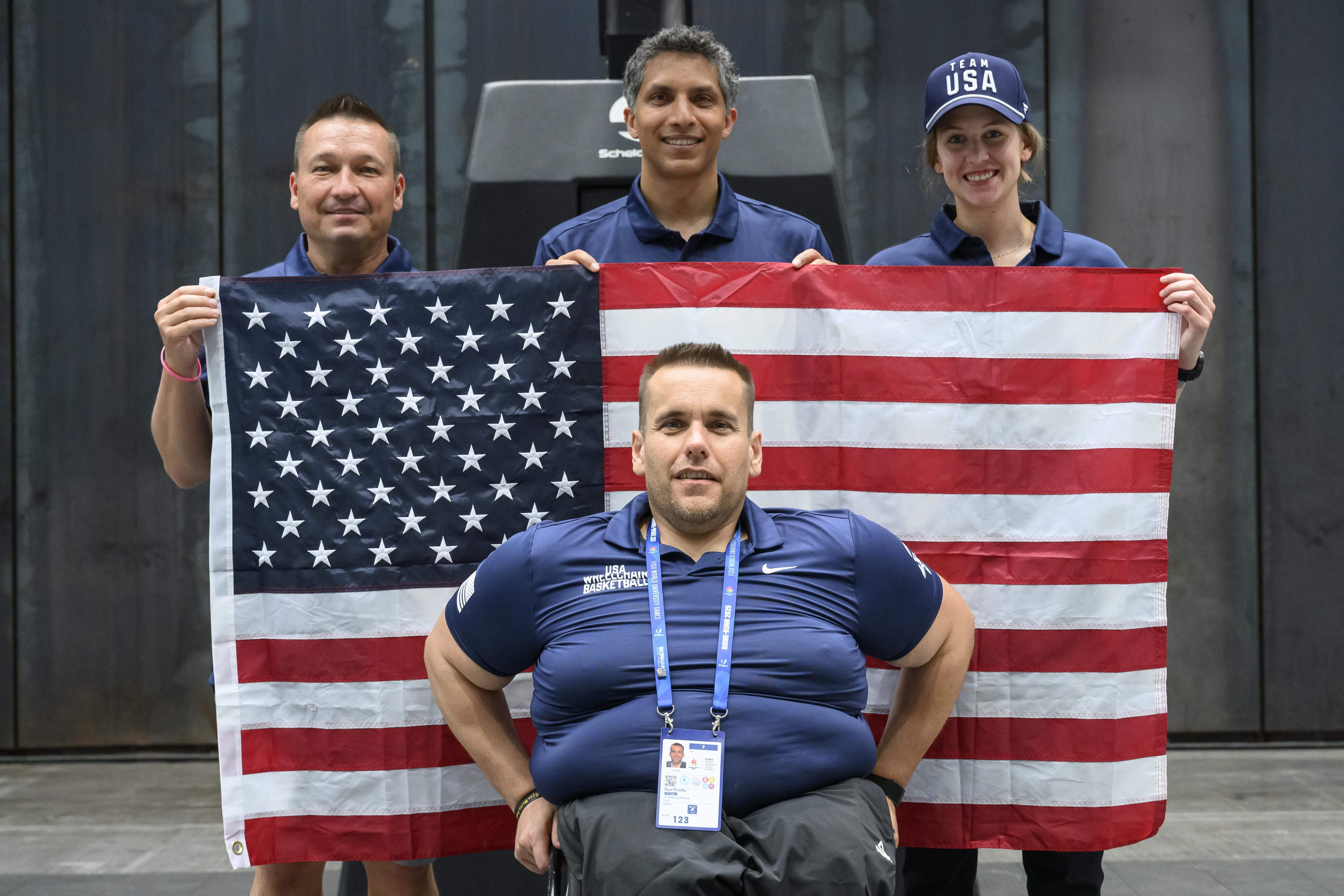
From the first camp in North Carolina to the final buzzer in Bochum, both squads embraced the speed, strategy, and adaptability the format demands. They leave not only with medals, but with momentum.
 Wheelchair Sports Federation
Leave a comment