
CORTINA, ITALY – Japan withstood a late rally from the United States to secure a 7–5 victory in mixed doubles wheelchair curling in its second game of round robin play at the Cortina Curling Olympic Stadium.
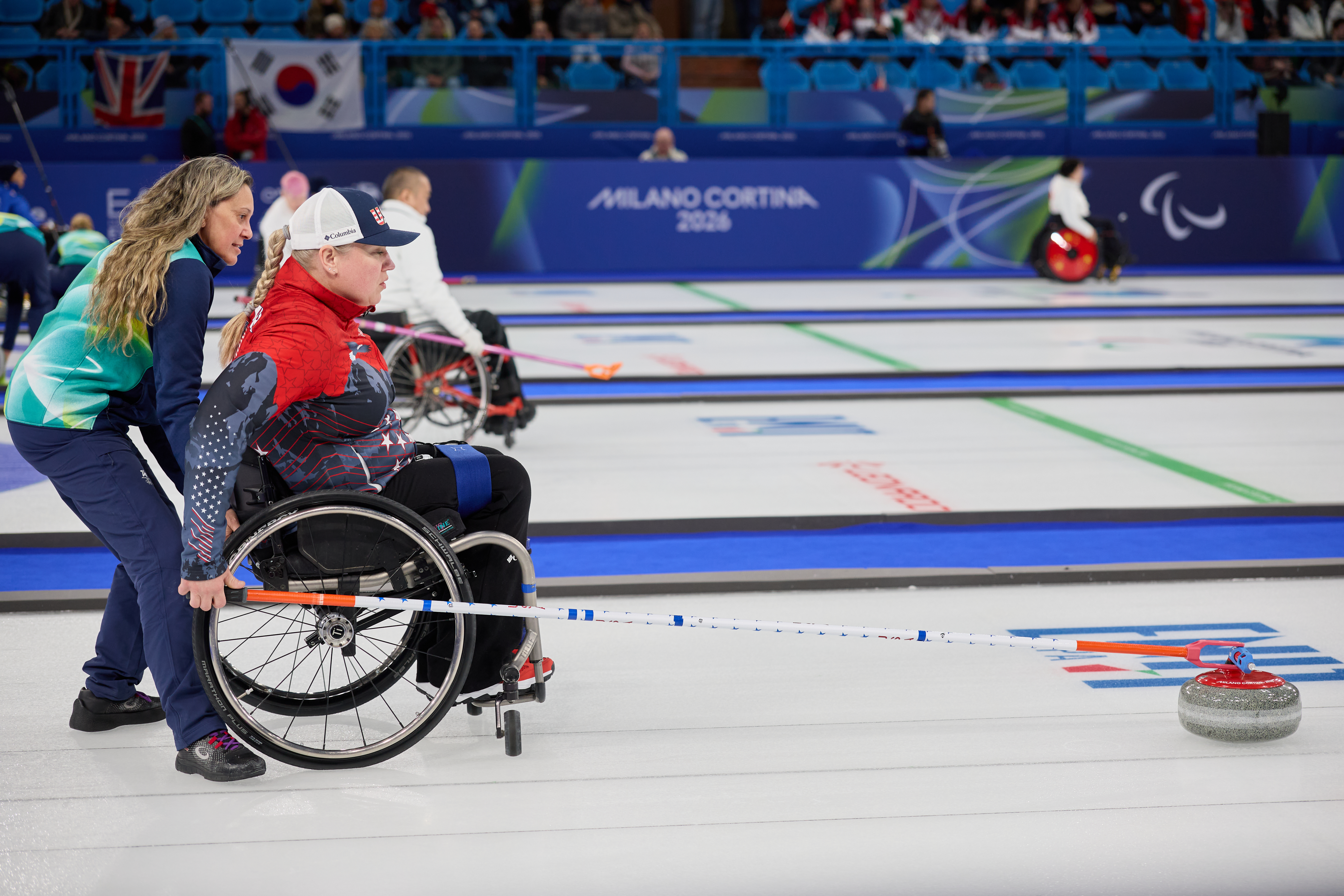
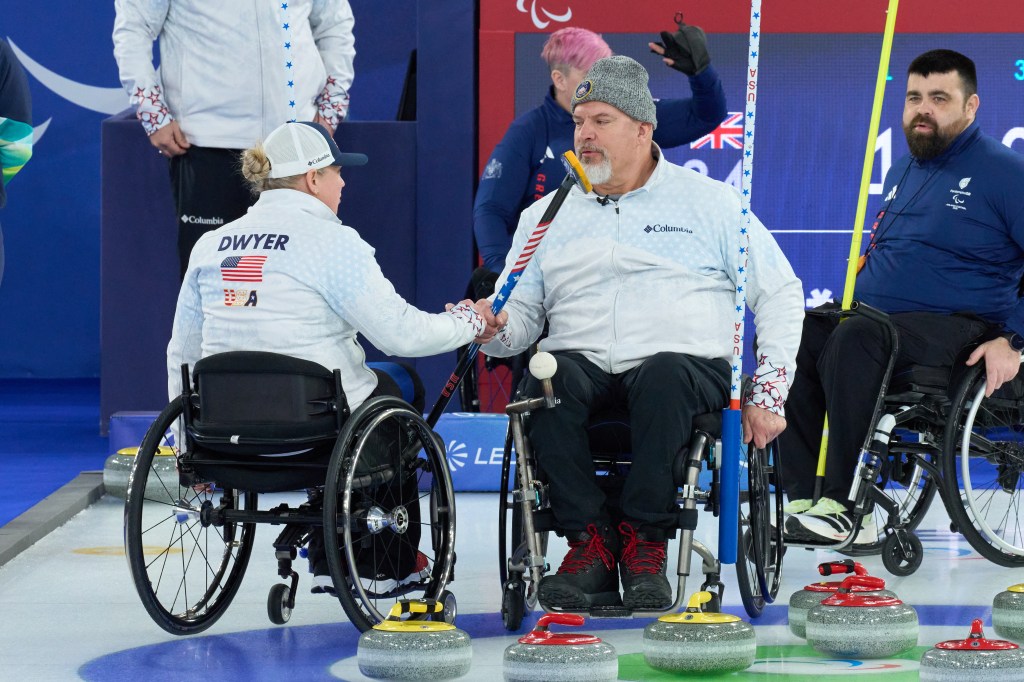
The American team of Stephen Emt and Laura Dwyer fell behind early as Japan’s Aki Ogawa and Yoji Nakajima controlled the middle portion of the game. Japan scored in the first end, added two in the third, and capitalized on U.S. misses to steal points in the fourth and fifth ends, stretching the advantage to 6–1.
(PHOTO CREDIT: Danny Chin)
Facing a five-point deficit, the United States responded in the sixth end by using its power play, creating an offensive setup that produced the biggest swing of the match.
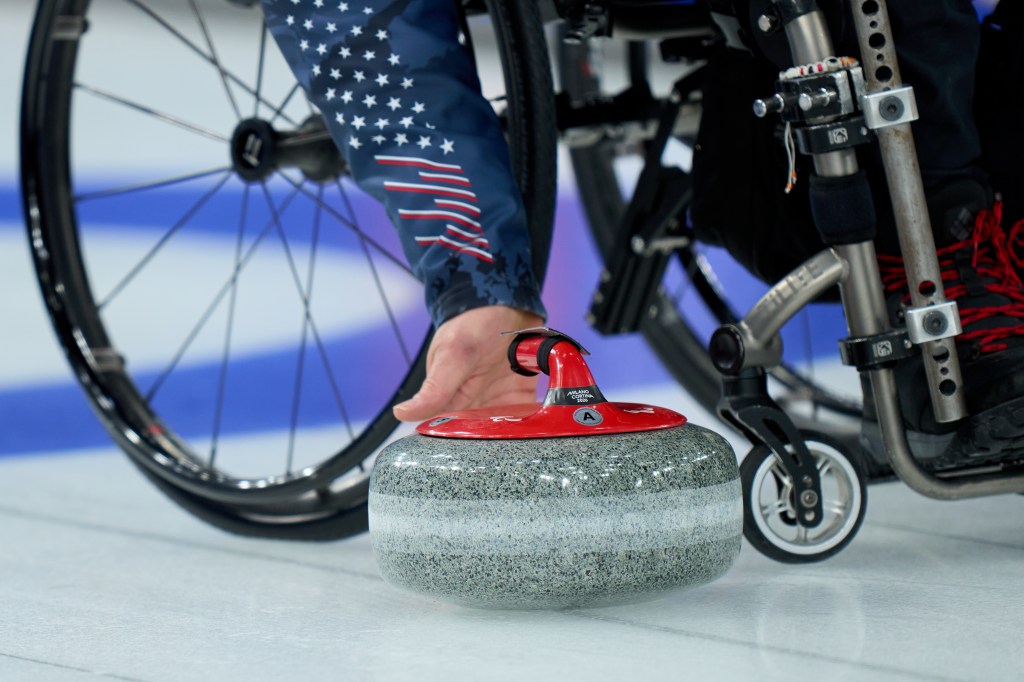
In mixed doubles wheelchair curling, each end begins with two stones already positioned on the sheet—one in the four-foot circle on the center line and one placed as a guard beyond the hog line. Once per game, the team with the hammer may call a power play, which moves those stones to the side of the sheet rather than the center. The off-center alignment opens the middle of the house and encourages more aggressive play as teams try to create multiple scoring stones.
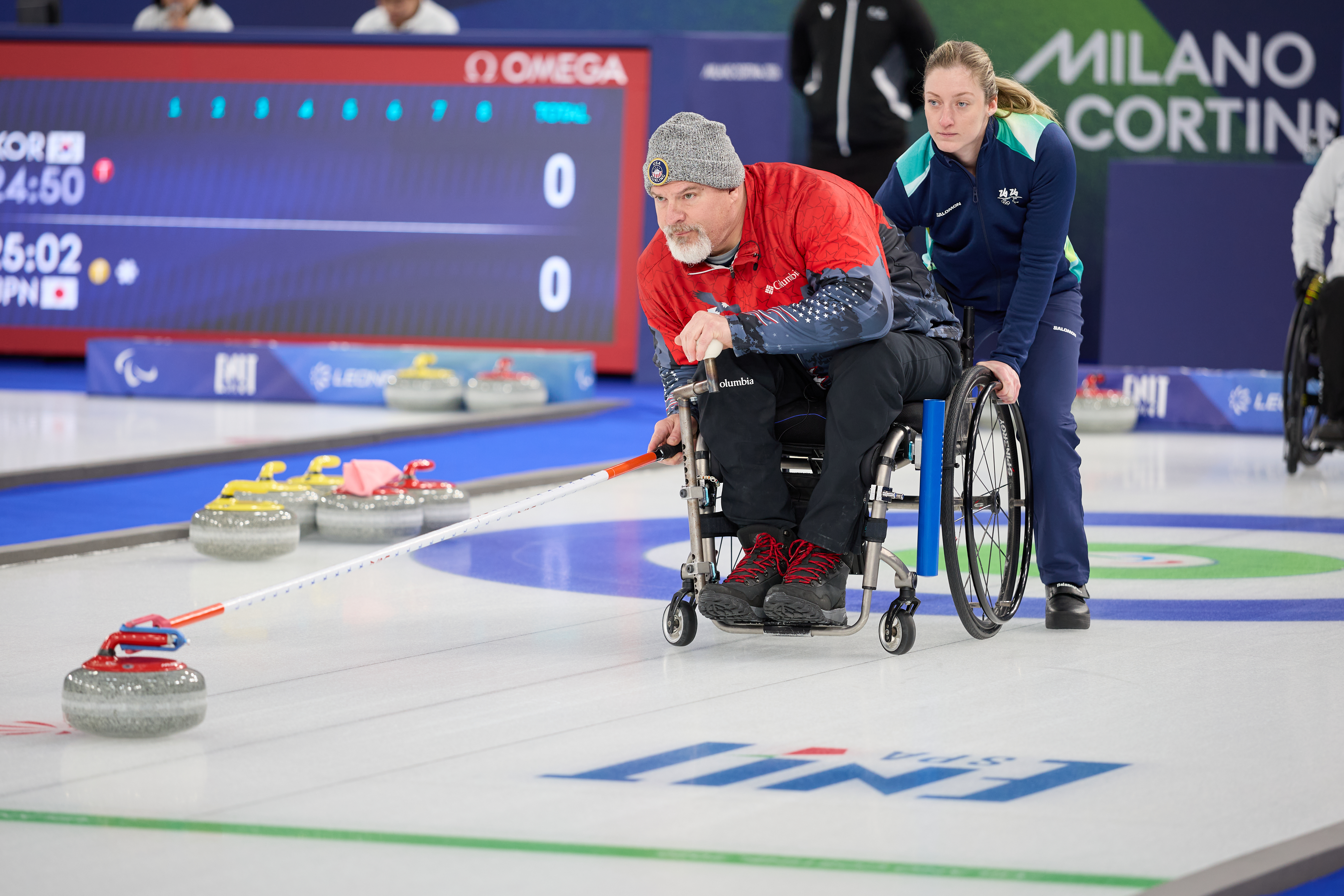
Emt’s final takeout after using the power play removed Japan’s shot stone and left four American stones counting, cutting the lead to 6–5 and completing a four-point sixth end that shifted momentum back to the United States.
(PHOTO CREDIT: Danny Chin)
Japan quickly regained control in the seventh end. With the hammer, the Japanese pair used their own power play to open the house and place early stones in scoring positions. A draw to the button on the final shot secured a single point and restored a two-point cushion at 7–5.
In the eighth end, the United States needed two points to force an extra end, but Japan’s aggressive play filled the four-foot circle with red stones and protected the scoring area. With Japan holding multiple counters late in the end, the Americans conceded before the final shot.
After the match, Emt acknowledged that although the Americans beat Latvia, they never fully found their rhythm, and the issue carried over into their game against Japan. Dwyer agreed, adding, “We struggled a little bit in the first games.” She said the duo simply needed to return to basics.
Japan finished the match with the stronger overall execution, recording 68 percent game shot success compared with 40 percent for the United States.
The result capped a game defined by two key momentum swings: Japan’s run of points through the middle ends and the United States’ four-point response in the sixth before Japan closed the match in the final two ends.
 media.wheelchairsportsfederation.org
Leave a comment