
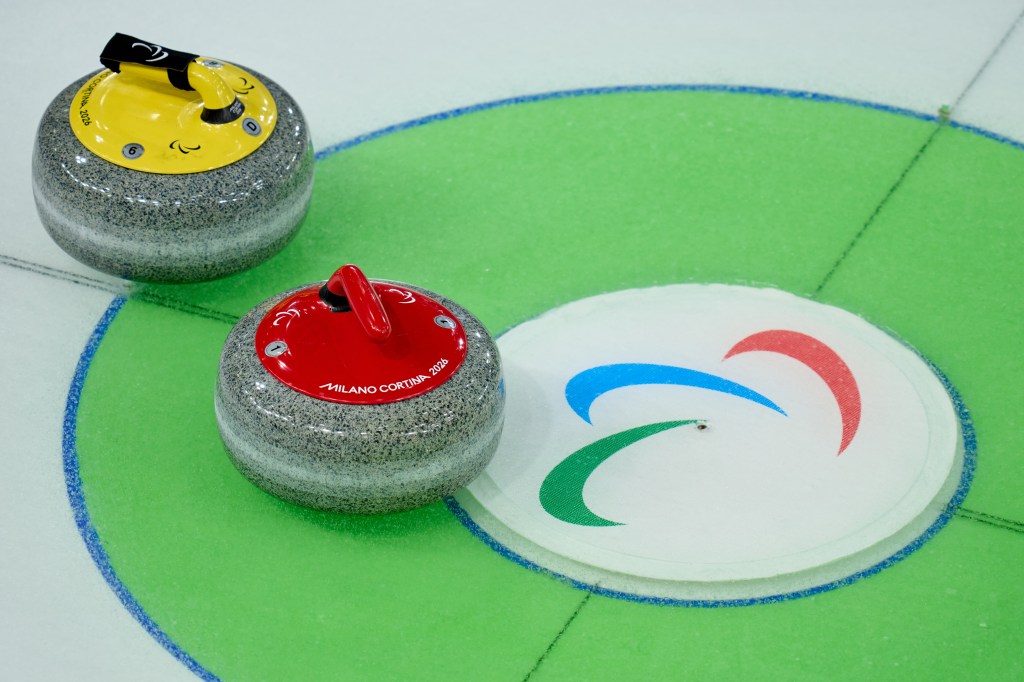
CORTINA, ITALY – Twenty years after wheelchair curling made its Paralympic debut at Torino 2006, the sport returns to Italy at the Milano Cortina 2026 Paralympic Winter Games with growing global depth and a historic milestone on the horizon.
Wheelchair curling first appeared internationally in the early 2000s before being added to the Paralympic program, quickly becoming one of the most strategic sports on the Winter Games schedule.
Milano Cortina 2026 marks another milestone for the sport as wheelchair mixed doubles makes its Paralympic debut alongside the established mixed team competition.
(PHOTO CREDIT: Danny Chin)
How the Game Is Played
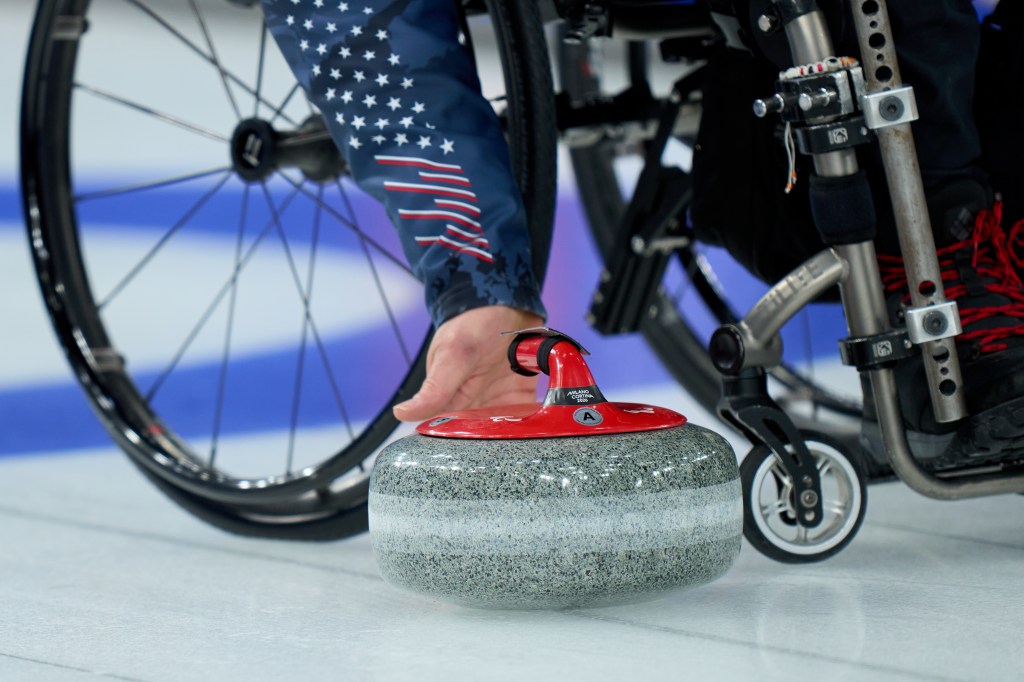
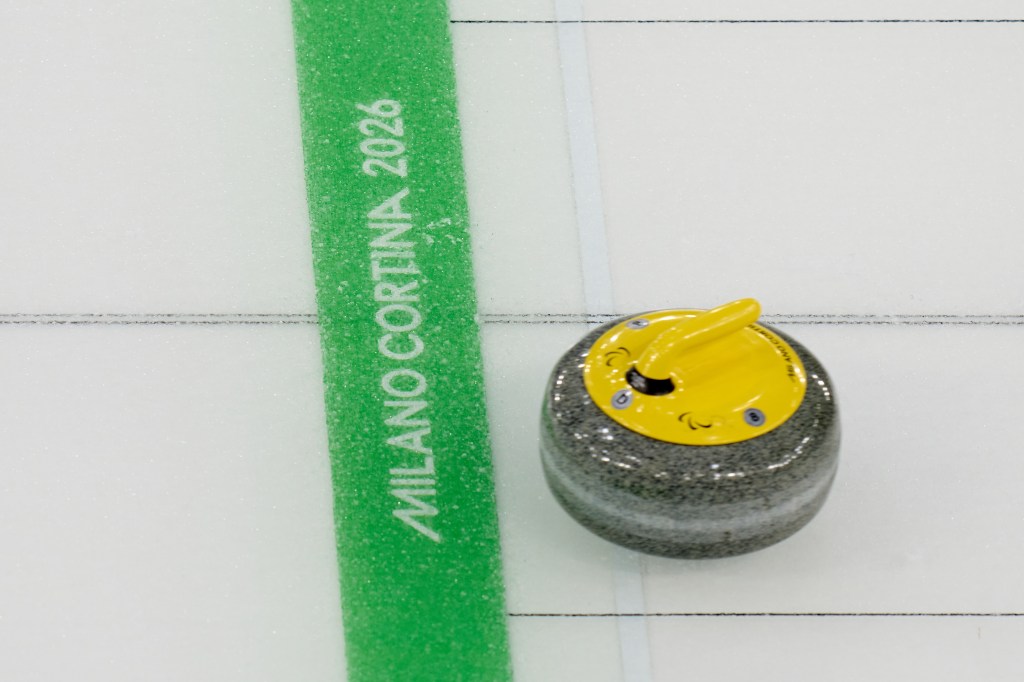
Wheelchair curling is played on a sheet of ice approximately 150 feet long and 15 feet wide. Teams alternate delivering 40‑pound granite stones toward the house, the circular scoring target at the opposite end.
The objective is straightforward: finish each end with stones closer to the center scoring target, known as the button, than the opponent’s closest stone. Behind that simple objective lies one of the most tactically rich sports in the Paralympic Winter Games.
Athletes deliver stones from a stationary wheelchair, either by hand or using a delivery stick, an adaptive device that extends the athlete’s reach and allows a controlled release. An effective shot depends on consistent mechanics, a clean release, and precise reads of the ice.
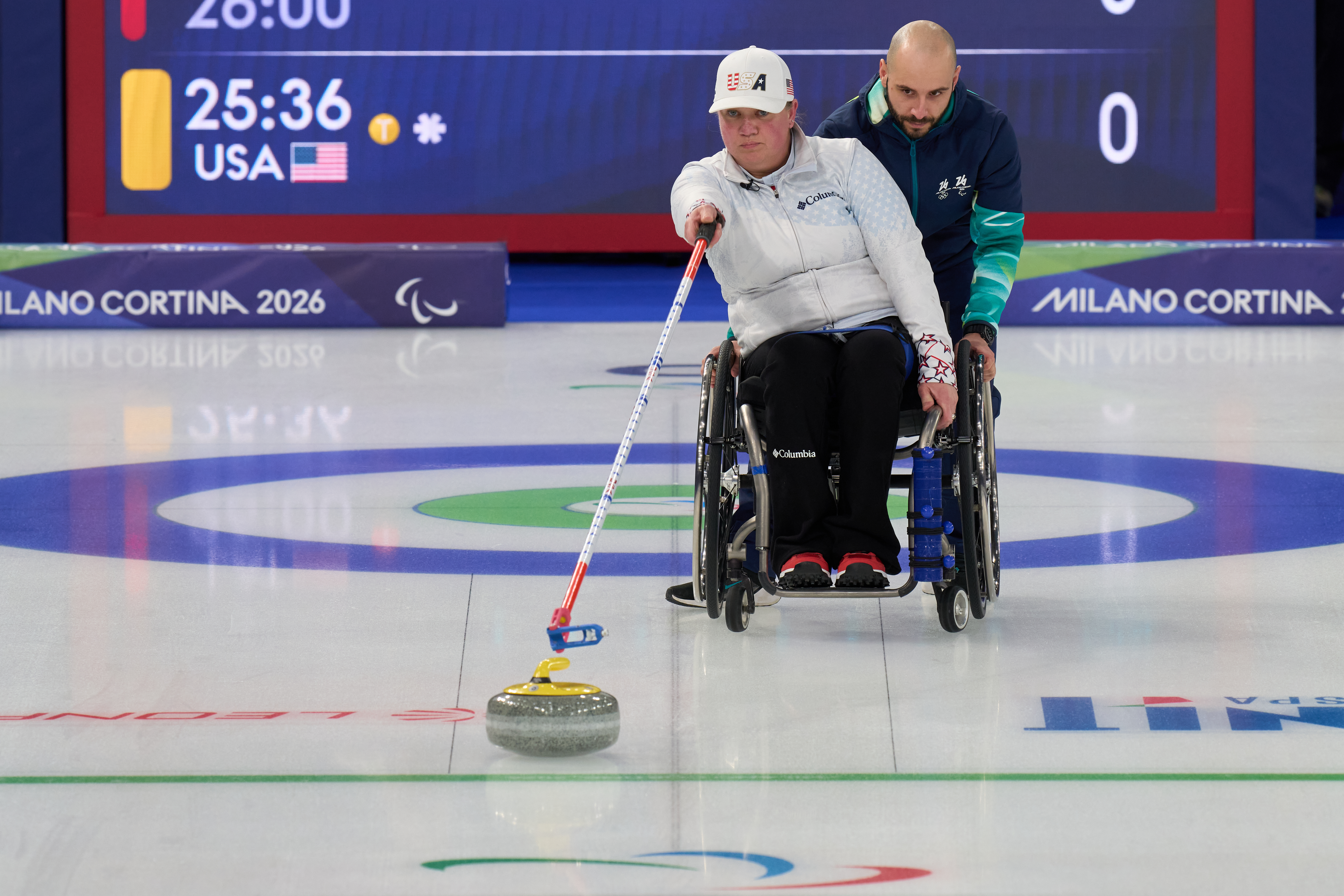
One defining element of wheelchair curling is that athletes cannot influence the stone after release through sweeping, meaning every delivery must be executed with remarkable accuracy. This is especially important in mixed doubles play.
In the traditional mixed team format, four athletes compete per team, including at least one female athlete. Mixed team games are typically played over eight ends, with each team delivering eight stones per end while managing a limited amount of thinking time to plan strategy and shot selection.
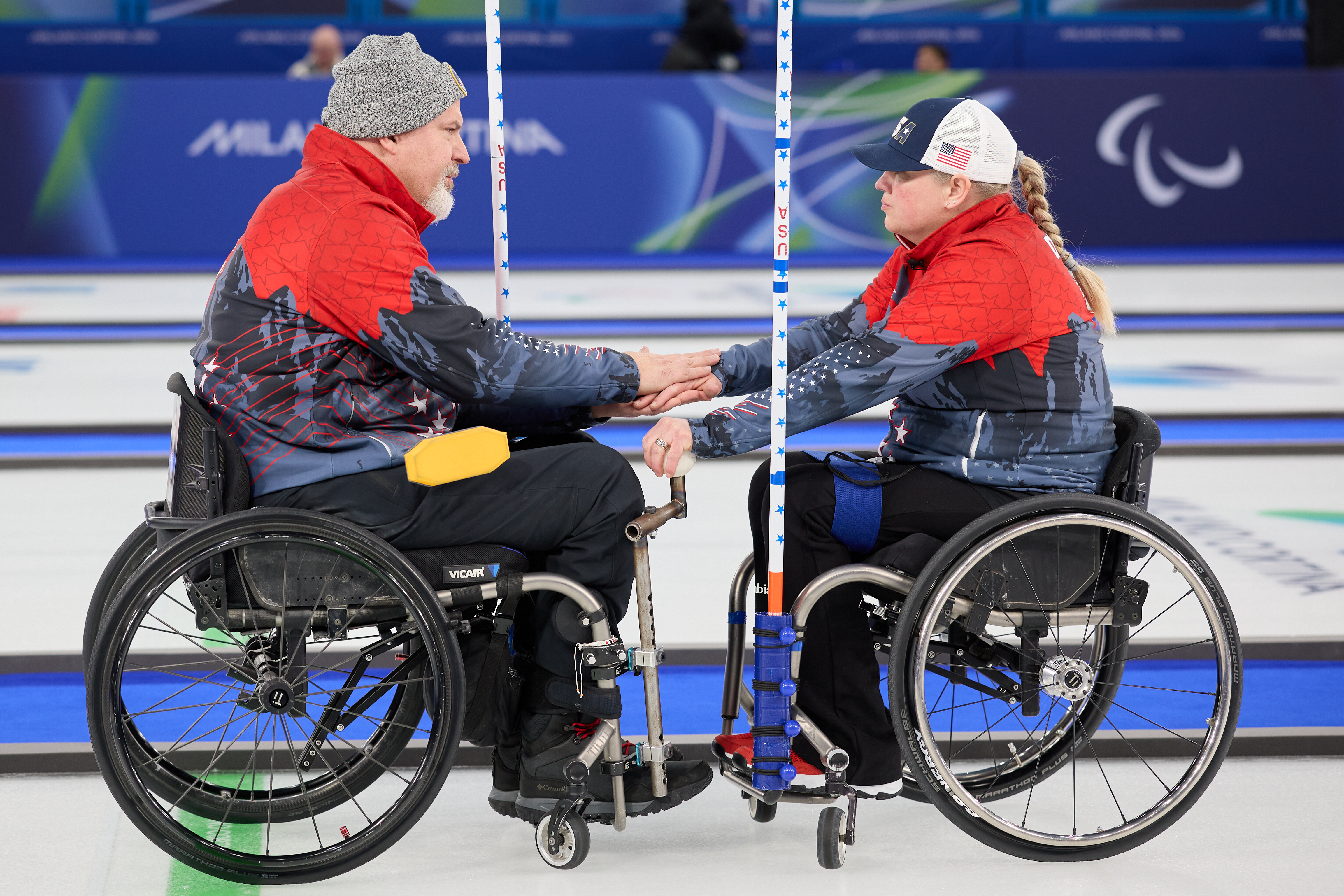
When describing mixed doubles play, Steve Emt, a three-time Paralympian offered “In this game we only have five stones per end. If you miss three or four, you’re going to give up points.”
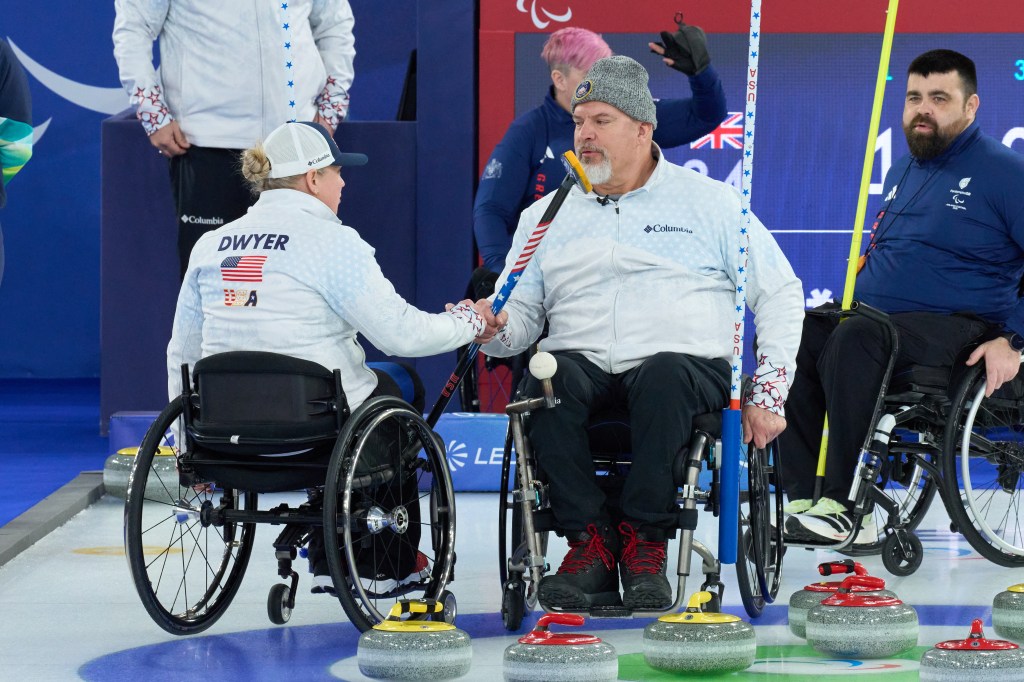
Wheelchairs remain stationary during delivery to ensure fairness across competitors. In mixed doubles, ice assistants hold the athlete’s wheelchair to ensure it remains stationary during delivery.
The addition of mixed doubles introduces a faster‑paced format with one male and one female athlete per team. After two stones, one from each team, are prepositioned on the ice, each team throws only five stones. With fewer stones available, mixed doubles rewards aggressive strategy and precise shot execution.
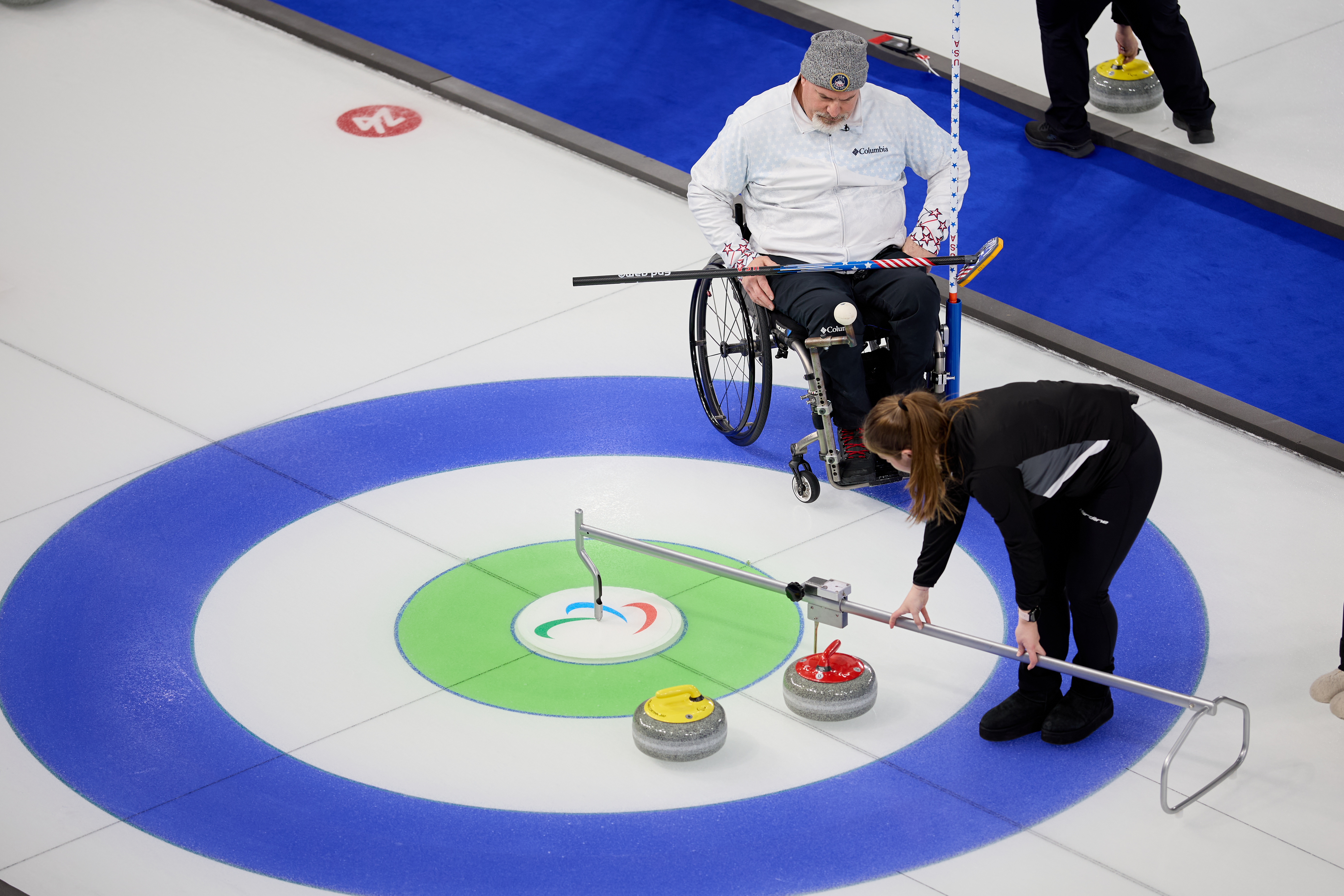
“Sometimes it takes a couple of ends to figure out the draw, how the ice is playing, and once you settle in you start to feel comfortable with the speed and the shots.” first time Paralympian Laura Dwyer explained.
Road to Milano Cortina 2026 Gold
The Cortina Curling Olympic Stadium at Cortina d’Ampezzo, originally built for the 1956 Winter Olympics when Cortina first hosted the Games, will house all events. The arena has undergone significant renovation ahead of 2026, allowing the historic venue to meet modern international standards while preserving its Olympic heritage.
“It’s a great environment, the whole experience so far, from the village, the country, the people, the landscape, the ice. It’s just an outstanding experience.” observed Steve Emt.
Ten nations will compete in the mixed team event: Canada, China, Great Britain, Italy, Latvia, Norway, Republic of Korea, Slovakia, Sweden, and the United States.
Eight nations will compete in the mixed doubles event: China, Estonia, Great Britain, Italy, Japan, Latvia, Republic of Korea, and the United States.
Both tournaments begin with a round‑robin stage, with the top four teams advancing to the semifinals and medal matches.
Teams to Watch
Several nations enter Milano Cortina with strong medal credentials.
China, the defending Paralympic champion, has been one of the most dominant programs in recent years. Canada remains a perennial contender with deep experience across its roster. Great Britain and Sweden consistently challenge for podium positions. Korea and Japan continue to develop competitive depth and regularly contend at world championships.
Team USA Outlook
For Milano Cortina 2026, the United States will compete in both the mixed team and mixed doubles events. The United States has steadily built its wheelchair curling program since first competing at the Paralympics in 2006 with expectations of moving up its competitive finishes.
The U.S. mixed team roster for Milano Cortina 2026 includes Dan Rose, Sean O’Neill, Matthew Thums, Oyuna Uranchimeg, and Katie Verderber (alternate).
In the wheelchair mixed doubles event, the United States will be represented by Laura Dwyer and Steve Emt.
For Team USA, success in Cortina will likely come down to the same factors that define the sport itself: disciplined shot selection, consistent draw weight, and capitalizing on scoring opportunities. In wheelchair curling, a single stone can shift momentum—and sometimes decide a medal.
 media.wheelchairsportsfederation.org
Leave a comment