
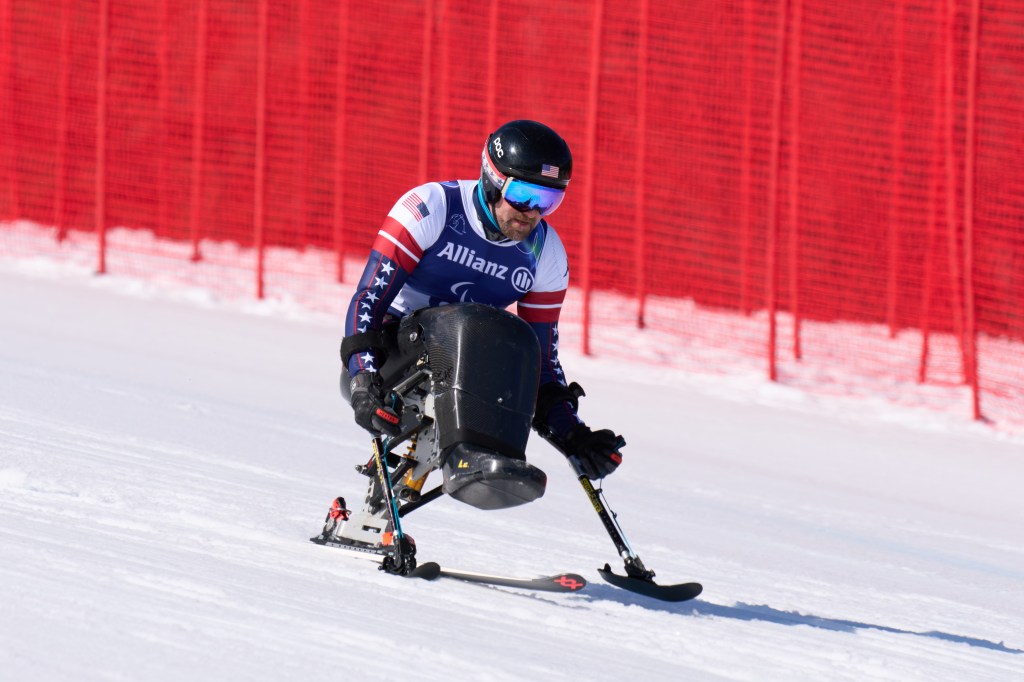
CORTINA, ITALY – Para alpine skiing will again take center stage high in the Dolomites at the Milano Cortina 2026 Paralympic Winter Games. On the slopes above Cortina d’Ampezzo, athletes will race downhill, super-G, giant slalom, slalom and alpine combined, navigating steep terrain at speeds approaching 60 miles per hour.
This year’s competition arrives with unusually warm weather in the Dolomites. Daytime temperatures have climbed into the upper 50s with overnight lows barely reaching freezing, leaving the snow surface soft and inconsistent. Forecasts call for highs in the upper 40s and lows in the low 30s during race week. The conditions have already disrupted preparation, with several training sessions cancelled as organizers worked to preserve the course.
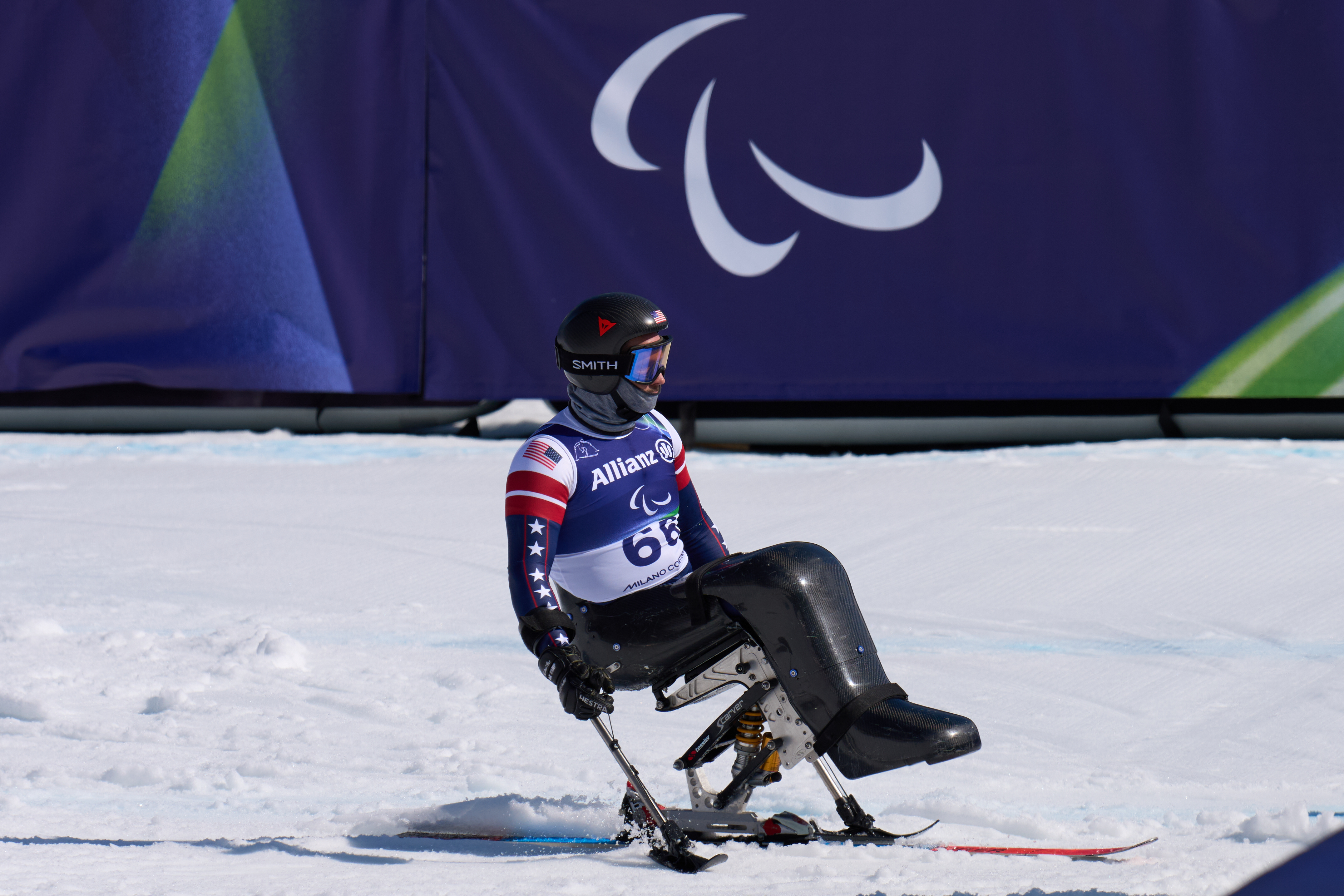
For racers, the softer snow adds a layer of complexity to courses that are already defined by terrain and speed.
“It almost felt more like I was surfing than skiing,” U.S. skier Robert Enigl said after Wednesday’s training run. “From inspection to the training run it changed completely.”
About Paralympic Alpine Skiing
Para alpine skiing has been part of the Winter Paralympic Games since 1976 and remains one of the fastest and most technically demanding sports on the program. Athletes compete in three classifications: standing, sitting and visually impaired.
Standing
Athletes ski upright, often using prosthetic limbs or outriggers—short crutch-like poles with small skis attached that provide balance and assist with turning.
Sitting
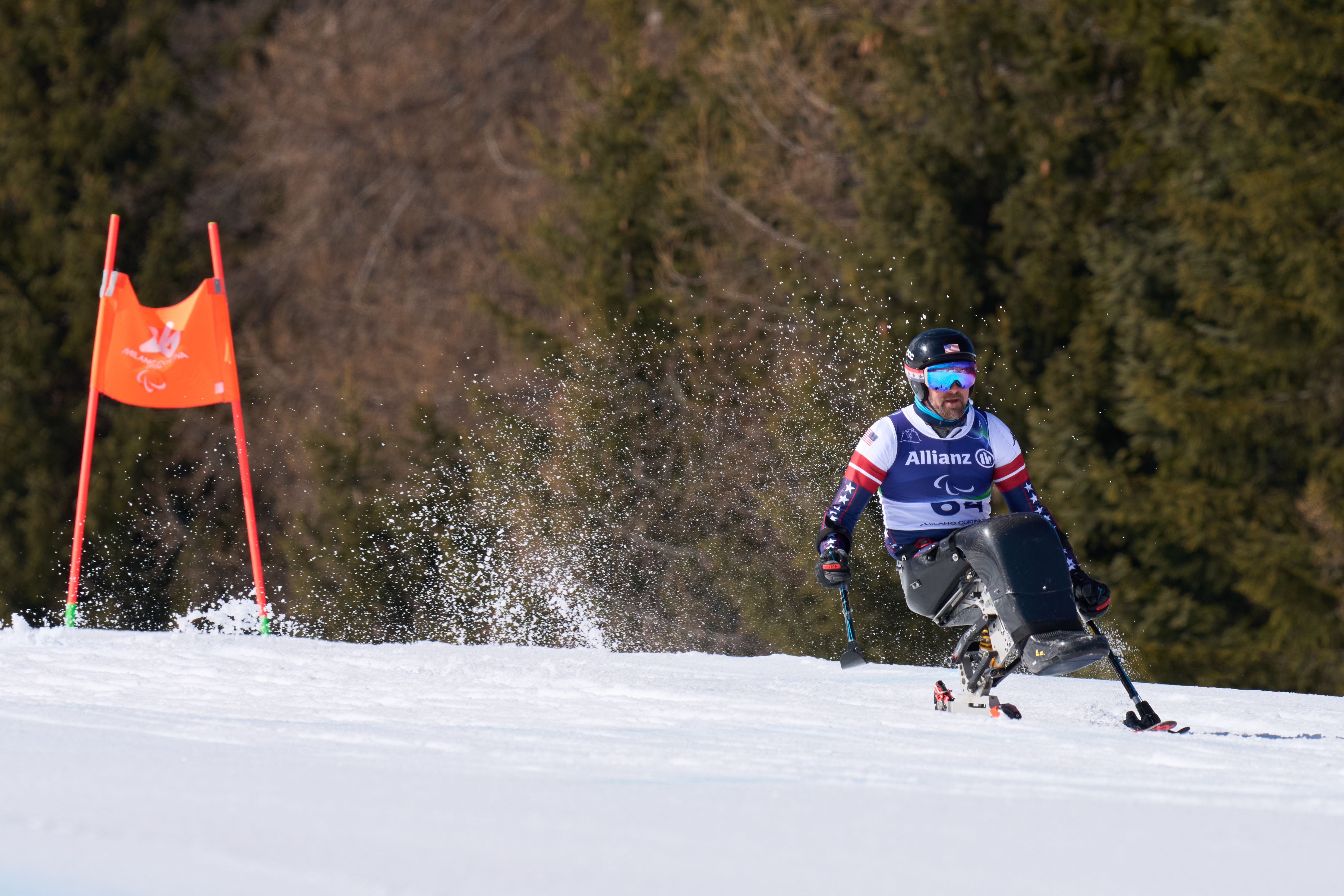
Competitors race in a sit-ski, a molded seat mounted on a single ski with suspension designed to absorb terrain changes. Athletes use outriggers for steering and stability.
Visually Impaired
Athletes ski with a guide positioned ahead of them on the course. The guide communicates terrain and timing through voice commands or radio headsets, allowing the athlete to maintain speed while navigating the course. Both receive medals if they reach the podium.
Results are adjusted using a classification factoring system in which each athlete’s raw time is multiplied by a factor tied to their classification. Across all classes, races are often decided by hundredths of a second.
Team USA
Team USA arrives in Cortina with a roster that blends proven Paralympic experience and developing talent across multiple classifications. Several athletes on the team return from recent Paralympic Games, while younger racers continue to gain experience on the international circuit.
Among the most accomplished members of the U.S. roster is Andrew Kurka, who has been one of the country’s top sit-ski racers in speed events over the past two Paralympic cycles. Kurka won downhill gold at the 2018 Winter Paralympics and added a silver medal in the super-G at the 2022 Games, making him a key contender whenever the schedule shifts to the speed disciplines.
Laurie Stephens also returns as one of the most experienced athletes on the American team. A multiple-time Paralympic medalist who began her Paralympic journey in Torino, Stephens has competed at the highest level of the sport across several Paralympic cycles. Her career includes gold medals in the super-G at the 2014 Winter Paralympics and the downhill at the 2022 Games. She has said that this will be her last games.
Beyond those veteran leaders, the U.S. roster includes several athletes continuing to build experience on the international stage. Racers such as Ravi Drugan, Robert Enigl, Patrick Halgren, and David Williams are among those working through the challenging Cortina courses during training and early competition.
Team USA also features a younger group of athletes developing within the program. Skiers including Blake Eaton and Jesse Keefe are gaining experience at the international level while competing alongside established Paralympians.
Teams to Watch
Internationally, para alpine skiing remains one of the deepest and most competitive sports on the Winter Paralympic program. European programs such as Austria, Switzerland, France, and Norway consistently produce strong results across multiple disciplines, with podium positions often decided by narrow margins.
In Cortina this week, those margins may be influenced as much by conditions as by speed alone. With warm temperatures softening the snow and altering the feel of the course from morning to afternoon, racers will need to adapt quickly and manage the terrain carefully throughout their runs.
For Team USA, that adaptability could be as important as speed. With experienced Paralympians leading the roster and younger athletes continuing to develop on the international stage, the American team enters the Cortina races prepared to navigate both the course and the conditions as the Paralympic alpine competition unfolds.
 media.wheelchairsportsfederation.org
Leave a comment